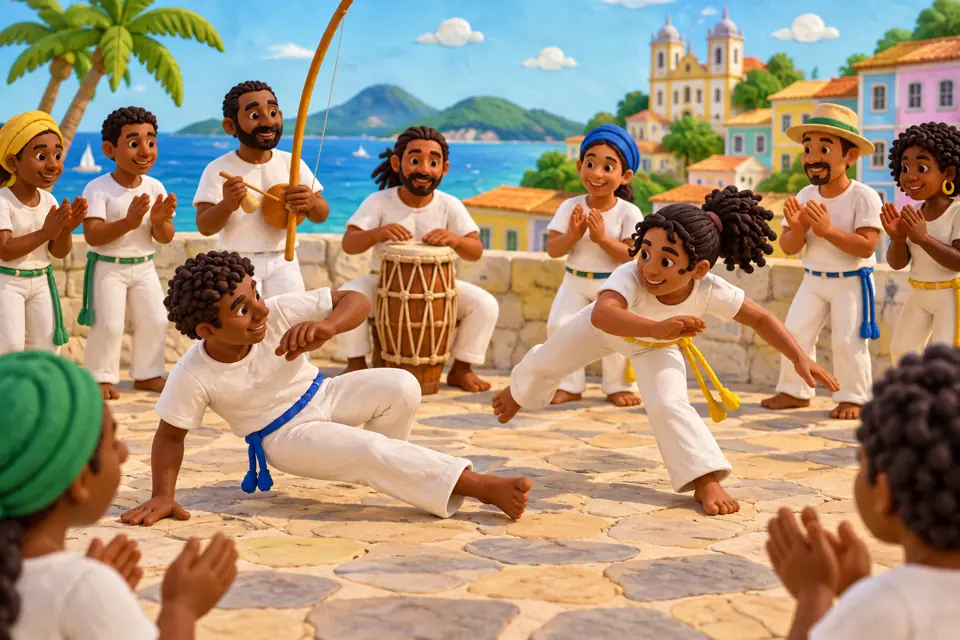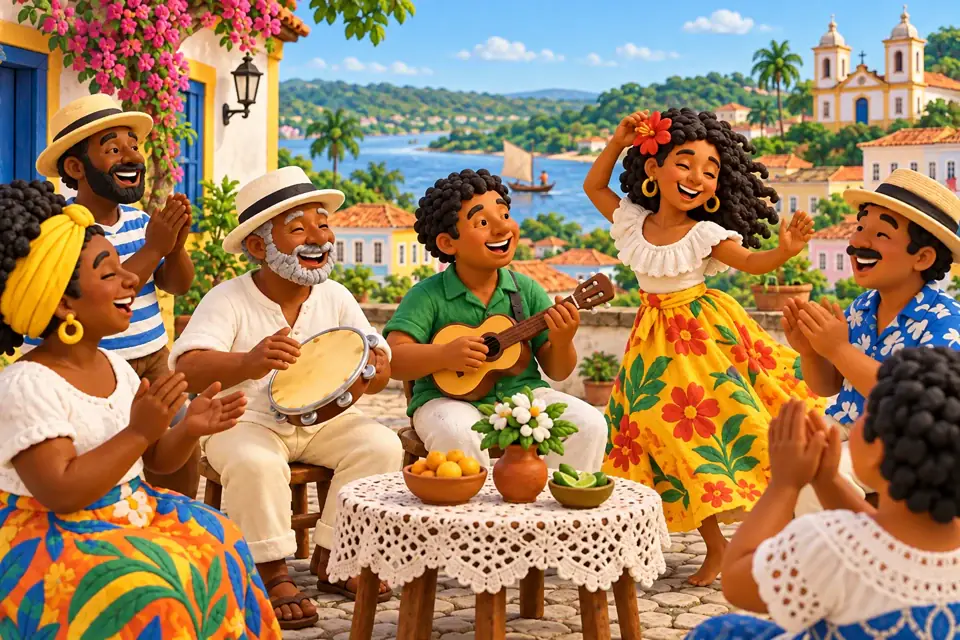
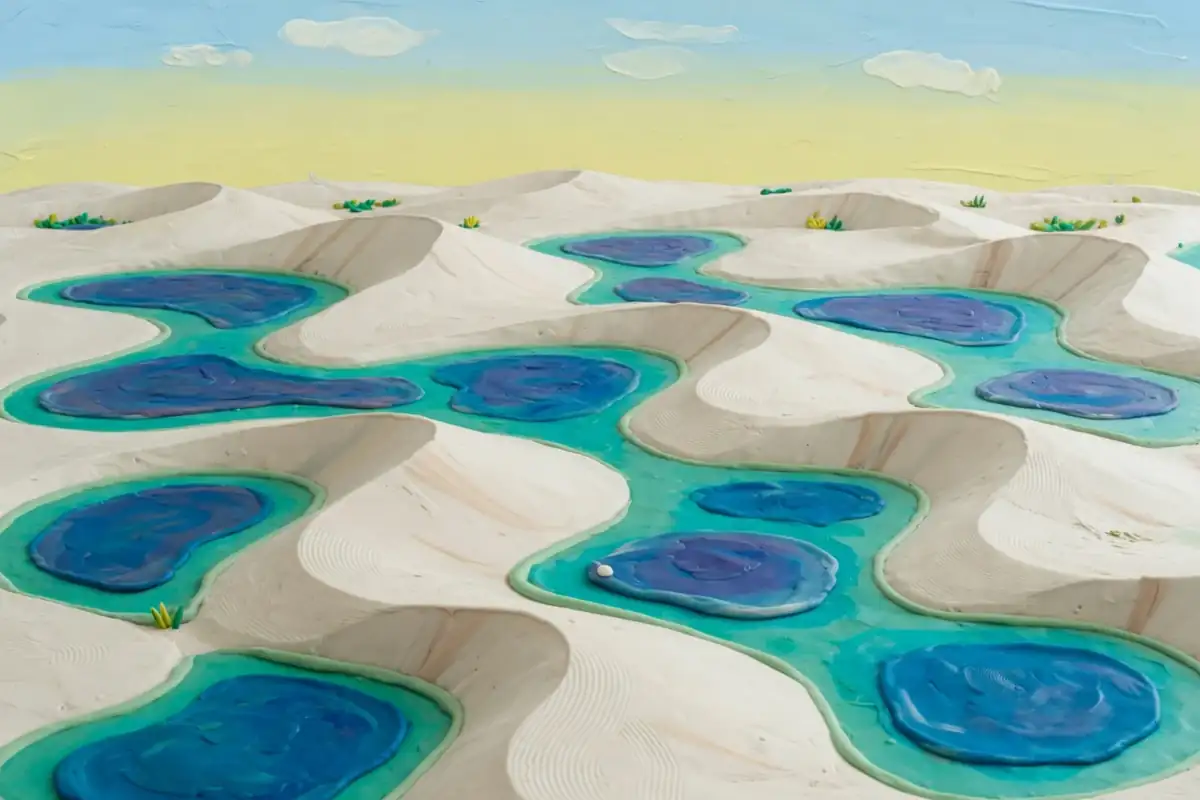

Clay picture-book aerial panorama of white Lençóis Maranhenses dunes filled with turquoise and deep-blue rain-fed lagoons
Little visits · real places

Flori & Luna visit Brazil

Listen for five story sounds from Rio's mountains and sea to Iguaçu's waterfalls, Brasília, Salvador, and the blue lagoons of Lençóis Maranhenses.

See the place, not just the characters

Five landmarks to point at together

Each clay scene is an illustrated interpretation shaped from official visual references. Flori and Luna guide the way while the real landmark remains the star.

Their bright travel clothes are playfully inspired by Festa Junina celebrations. These festivals vary across Brazil and mix many regional traditions; the illustrations are not a Brazilian national costume. Clothing reference: Brazil Ministry of Tourism: Festas de São João (opens in a new tab).

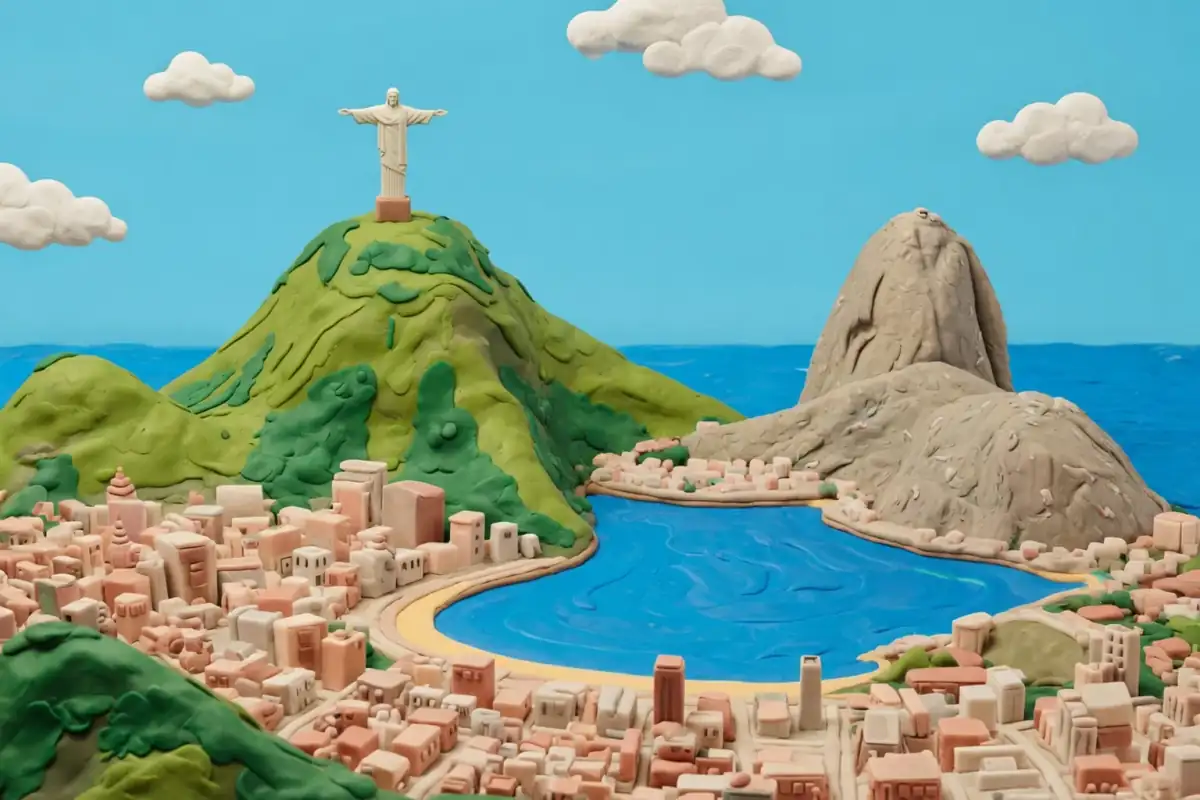
Illustrated Rio landscape with Corcovado and Christ the Redeemer above green mountains, city, blue bay, and SugarloafIllustrated landmark view

Hear mountain, city, and sea

Rio de Janeiro's mountain-and-sea landscape

Rio grows between steep green mountains and a curving Atlantic shoreline. From Corcovado, the pale Christ the Redeemer monument overlooks the city, bay, and Sugarloaf Mountain.

Look for: Corcovado, the small outstretched monument, green peaks, curved bay, city, and Sugarloaf.

Check the real landmark source: UNESCO: Rio de Janeiro, Carioca Landscapes between the Mountain and the Sea (opens in a new tab)
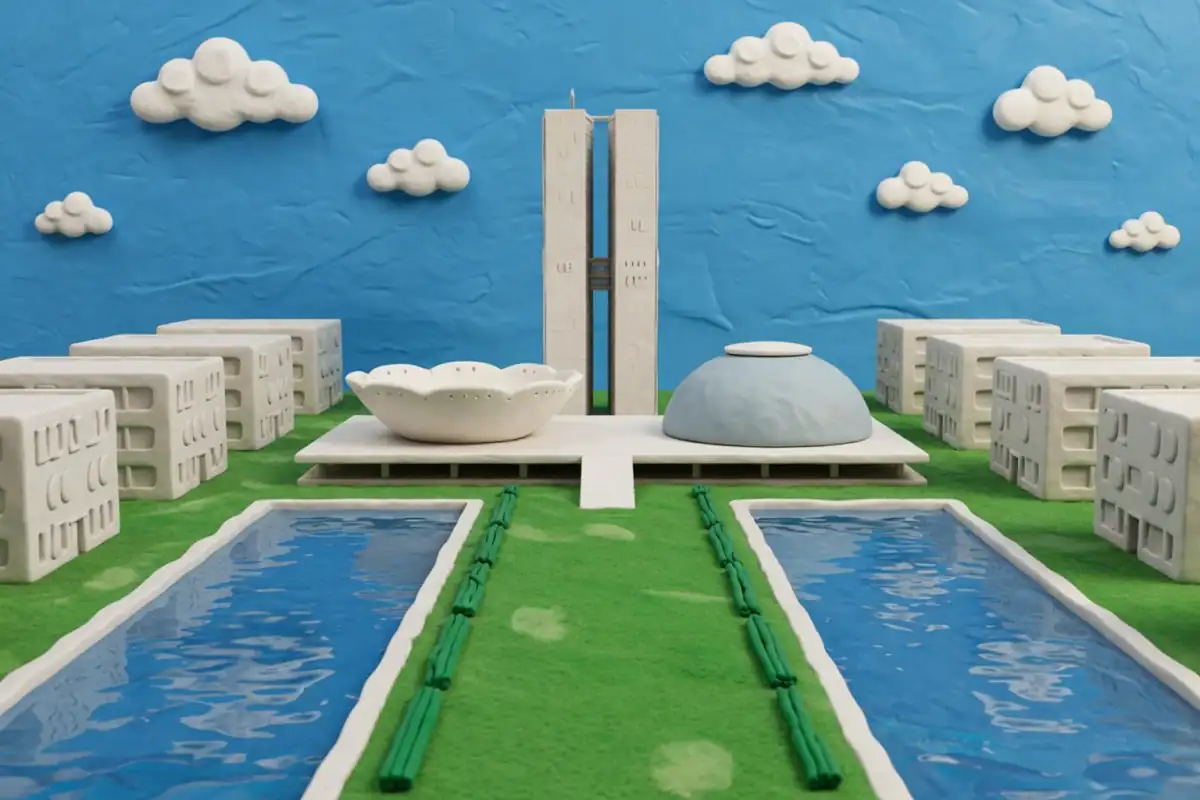
Illustrated Brasília Monumental Axis with twin Congress towers, bowl-shaped and dome-shaped chambers, lawns, and reflecting poolsIllustrated landmark view

Hear an echo on the long axis

Brasília

Brazil's planned capital developed from 1956 around broad axes and modernist civic buildings. The National Congress is easy to spot by its twin towers between one bowl-shaped chamber and one low dome.

Look for: the long green axis, twin towers, white bowl and dome, broad plazas, and reflecting water.

Check the real landmark source: UNESCO: Brasília (opens in a new tab)
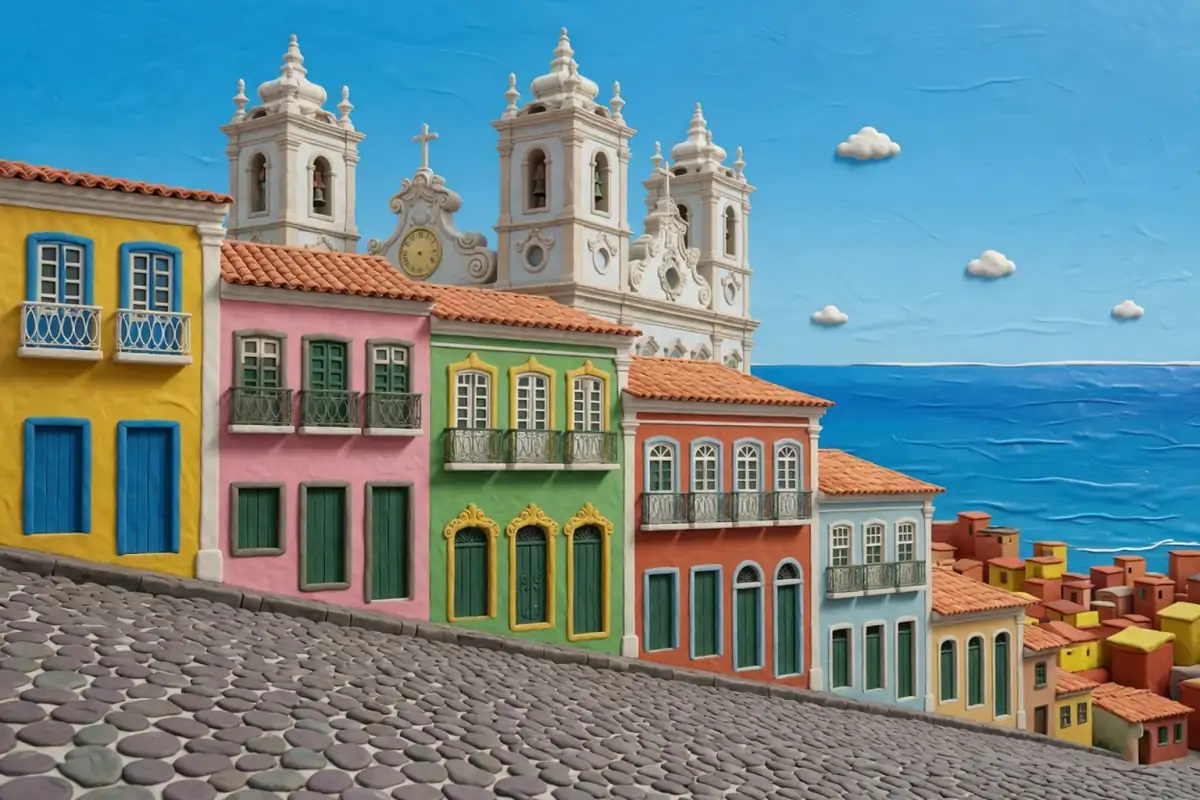
Illustrated Salvador historic centre with a sloping cobbled square, colorful façades, church towers, and upper-city viewIllustrated landmark view

Hear footsteps on a colorful hill

Historic Centre of Salvador de Bahia

Salvador's historic centre links upper and lower parts of the city with steep streets and squares. Rows of richly colored façades and church towers reflect the city's layered colonial and Afro-Brazilian history.

Look for: sloping cobbles, colorful façades, tall windows, church towers, squares, and a view downhill.

Check the real landmark source: UNESCO: Historic Centre of Salvador de Bahia (opens in a new tab)
Flori and Luna hold a bright listening wheel with five empty sound windows above Rio's blue bay

The adventure is fictional. The place is real.

The Five Travel Sounds of Brazil

A little listening wheel remembers sea breeze, waterfall roar, city echo, cobbled footsteps, and dune wind.

  • Seven different picture-book scenes
  • Gentle prompts for ages 2–6
  • Real place details linked to their sources
Turn the first page

Point, notice, wonder

Two real places to meet

Each claim below links directly to the institution used to check it.

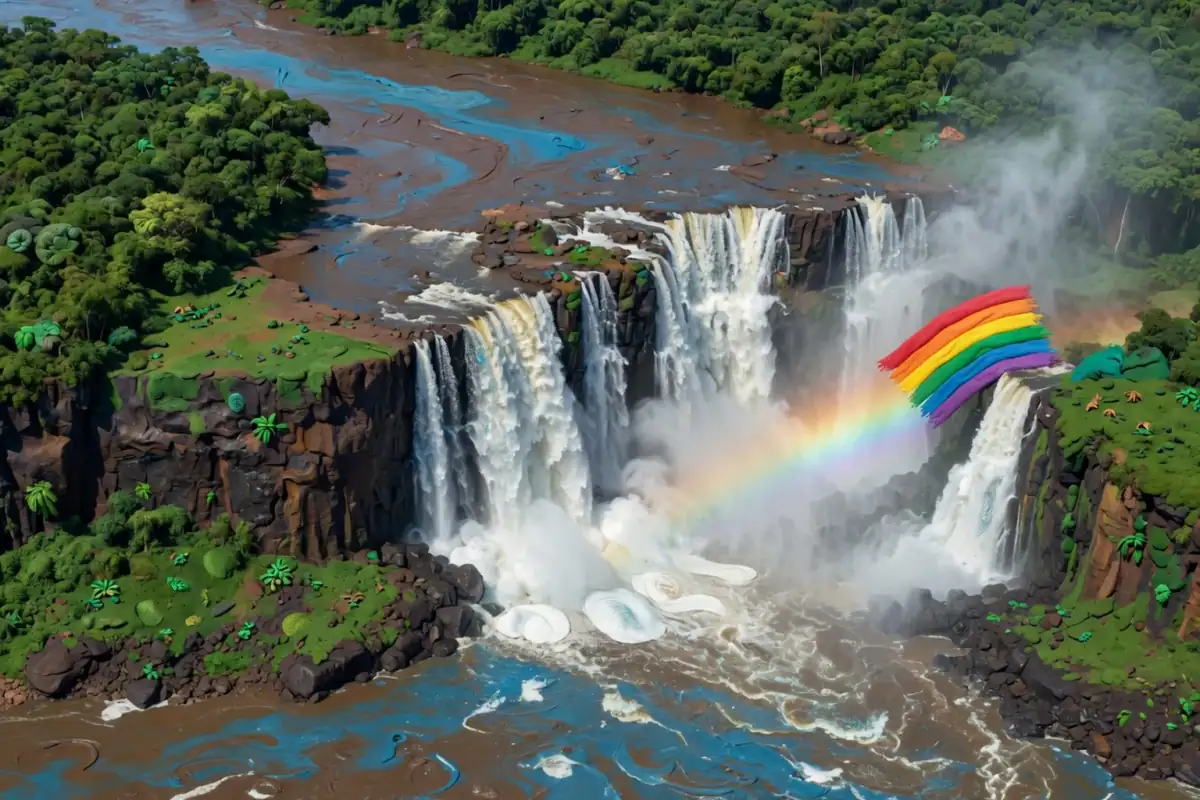
Clay panorama of the broad Iguaçu waterfall front and surrounding forest

From coast to roaring water

Rio, Iguaçu, and Brasília

A city between mountain and sea, a giant waterfall system, and a planned modernist capital make three enormous landscapes for children to compare.

  1. 1.1

    UNESCO recognizes Rio as a cultural landscape shaped by the relationship between the city, mountains, and sea. Source: UNESCO: Rio de Janeiro, Carioca Landscapes between the Mountain and the Sea (opens in a new tab)

  2. 1.2

    Iguaçu National Park protects one of the world's largest and most impressive waterfall systems. Source: UNESCO: Iguaçu National Park (opens in a new tab)

  3. 1.3

    Brasília was planned and developed as Brazil's capital from 1956. Source: UNESCO: Brasília (opens in a new tab)

Clay aerial view of white Lençóis Maranhenses dunes and blue lagoons

Colorful streets to blue lagoons

Salvador and Lençóis Maranhenses

The final pair shifts from tightly packed historic streets to an immense open field of white dunes and seasonal blue water.

  1. 2.1

    Salvador's historic centre preserves the urban structure of an upper and lower town joined by steep routes. Source: UNESCO: Historic Centre of Salvador de Bahia (opens in a new tab)

  2. 2.2

    More than half of Lençóis Maranhenses National Park is a white coastal dune field with temporary and permanent lagoons. Source: UNESCO: Lençóis Maranhenses National Park (opens in a new tab)

How this series is made

Fiction clearly labeled. Real details sourced.

Flori and Luna's adventure is invented. The geography, landmarks, dates, and historical descriptions are checked against UNESCO, government, municipal, museum, or university sources before publication. The clay scenes are friendly illustrated interpretations, not documentary reconstructions.

Research last reviewed August 26, 2026. See something we should revisit? Send a correction.

Keep the language closeBrowse English + Portuguese books →For grown-upsCompare Brazilian and European Portuguese
Where should they visit next?Get the next little visit

A note from Luna

Send me new stories & tips

Share an adult’s email and we’ll only use it for the Flori & Luna update you choose here.

Checking notification availability…